
Thuy Vo Dang
Biography
Thuy Vo Dang (she/her/hers) is Assistant Professor of Information Studies at UCLA where she co-directs the Community Archives Lab. She holds a Ph.D. in Ethnic Studies from University of California, San Diego and a B.A. in English and Asian American Studies from Scripps College. Her previous role was Curator for the UCI Libraries Southeast Asian Archive and Research Librarian for Asian American Studies. With research and teaching expertise in Southeast Asian diaspora, ethnic studies, oral history, and community archives, Thuy brings an interdisciplinary approach to co-creating digital humanities and archival documentation projects with educators and community-based organizations. Her current research and community engagement work center “refugee archival praxis” through the storytelling strategies of first and second generation Vietnamese in the diaspora. She is coauthor of the books A People’s Guide to Orange County (2022) and Vietnamese in Orange County (2015) and has published in Amerasia Journal, AAPI Nexus: Policy, Practice and Community, Health Promotion Practice, History Now: the Journal, Ethnic Studies in Academic and Research Libraries, and Toward a Framework for Vietnamese American Studies.Thuy serves on the board of directors for Arts Orange County and the Vietnamese American Arts & Letters Association.
Books
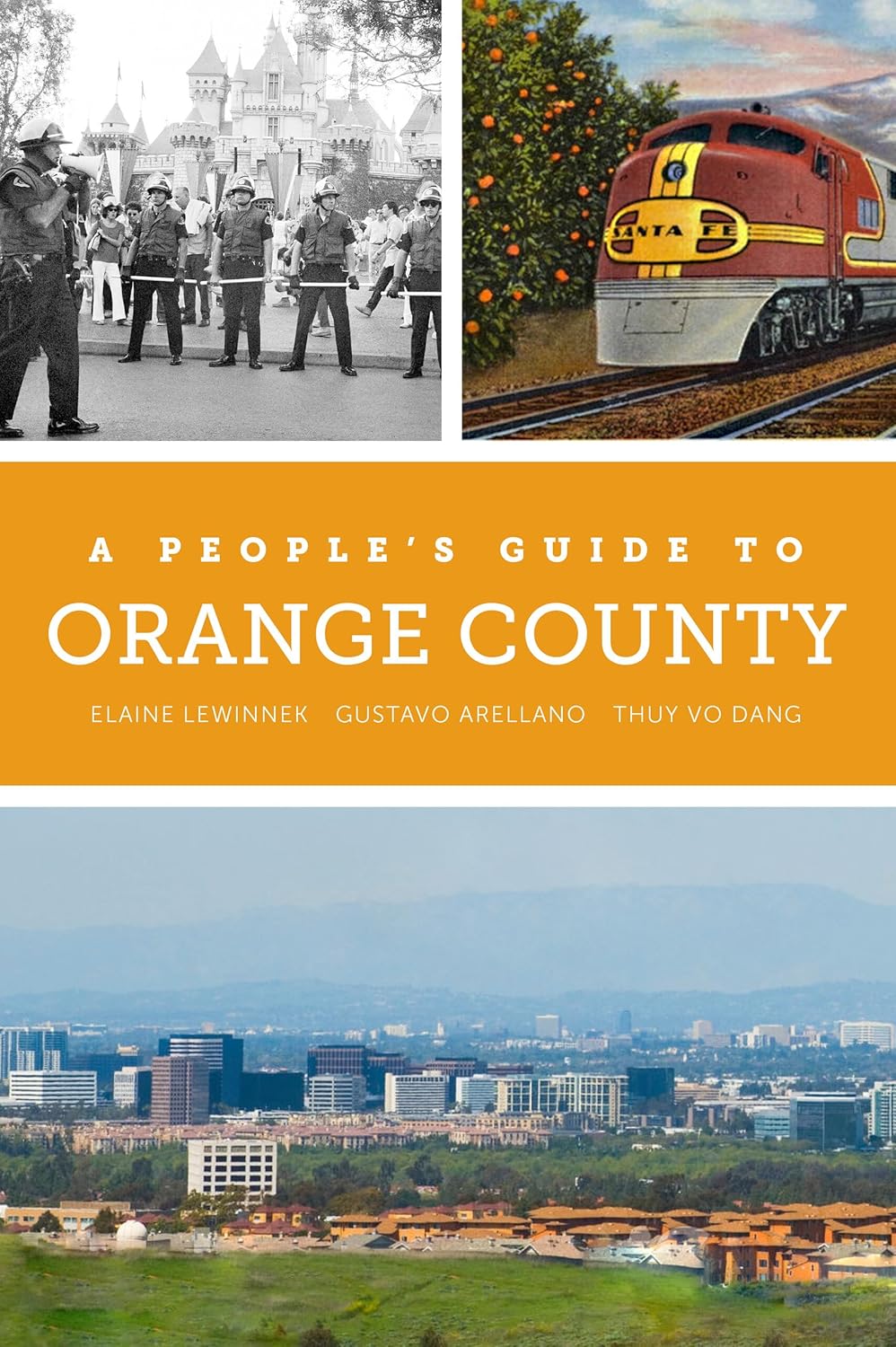
A People’s Guide to Orange County is an alternative tour guide that documents sites of oppression, resistance, struggle, and transformation in Orange County, California. Orange County is more than the well-known images on orange crate labels, the high-profile amusement parks of Disneyland and Knott’s Berry Farm, or the beaches. It is also a unique site of agricultural and suburban history, political conservatism in a liberal state, and more diversity and discordance than its pop-cultural images show. It is a space of important agricultural labor disputes, segregation and resistance to segregation, privatization and the struggle for public space, politicized religions, Cold War global migrations, vibrant youth cultures, and efforts for environmental justice. Memorably, Ronald Reagan called Orange County the place “where all the good Republicans go to die,” but it is also the place where many working-class immigrants have come to live and work in its agricultural, military-industrial, and tourist service economies.
Orange County is the fifth-most populous county in America. If it were a city, it would be the nation’s third-largest city; if it were a state, its population would make it larger than twenty-one other states. It attracts 42 million tourists annually. Yet Orange County tends to be a chapter or two squeezed into guidebooks to Los Angeles or Disneyland. Mainstream guidebooks focus on Orange County’s amusement parks and wealthy coastal communities, with side trips to palatial shopping malls. These guides skip over Orange County’s most heterogeneous half—the inland space, where most of its oranges were grown alongside oil derricks that kept the orange groves heated. Existing guidebooks render invisible the diverse people who have labored there. A People’s Guide to Orange County questions who gets to claim Orange County’s image, exposing the extraordinary stories embedded in the ordinary landscape.