What is your writing process like when working on essays or reviews as a literary critic? Are there certain works that you gravitate toward for literary analysis? Is there overlap between how you go about your work as a literary critic and as a translator?
I would try to take a holistic, immersive approach, paying attention to both the historical and cultural contexts when writing my review or essay as a literary critic. It makes no difference whether the essay is written in English or Vietnamese. This tendency probably has autobiographical roots. I came to the U.S. as a thirteen-year-old refugee, right at the juncture between the end of childhood and the beginning of adulthood, between the past and the future, between my maternal tongue and my adopted tongue. I don’t know if this need to provide an immersive analysis of any literary work I have come across reflects my obsessive attempt to make sense of this in-betweenness. It’s definitely a Proustian neurosis — the exhaustive need to make logical and whole any work that actually is rooted in fragmentation, experimentation, or defies understanding. Accordingly, I tend to be dismissive toward what I perceive as escapist or formulaic literature, where the author’s intention is to please or soothe the reader. But I’m also aware that my ready judgment for any “instant ramen” text (văn chương mì ăn liền), grounded in the belief that good literature must be structurally strange or disorienting to jolt the populace out of its complacency, might be construed as elitist, presumptuous, or naive—as this belief posits that a “worthy” book, like any great work of art, has the power to change the status quo. Therefore, my holistic zeal to write about what I define as good literature is earnest but probably not egalitarian. ☺
As mentioned above, most of my review essays contain autobiographical elements. For instance, in my review of Viet Thanh Nguyen’s The Committed for NPR, I ask questions that reflect my identity as a Vietnamese-American grappling with intergenerational views about the Vietnam War:
The Committed also reiterates the ideas first articulated in The Sympathizer, “What is to be done?” — the question that Nguyen poses in both novels — is a timeless inquiry into the forces that shape our moral worldview. And while it’s a universal question, its ideological implications prove especially challenging for Vietnamese Americans who came of age after the end of the Vietnam War …. [C]an we have a balanced perspective if we did not directly suffer war or its consequences, but learned about war’s impacts from family members toward whom we owe both blood and emotional allegiance?
My need to provide an immersive reading of a literary work also extends to the texts that I choose to translate. If literary criticism reflects how one reads a work, then the choices in translation also depend on how the original work is interpreted by a translator. There is indeed a symbiotic relationship between critical analysis and translation. A literary text lives on if the reading or translation of that text reveals new ideas, new interpretations. Therefore, I believe that the process of reading, or translating a text, even one that’s familiar to most readers, is a creative, even revolutionary endeavor, when such process attempts to subvert or expand the scope of how that text has long been perceived.
Let’s take a look at Nguyên Sa’s “Áo Lụa Hà Đông,” an iconic poem in pre-1975 South Vietnam but perhaps not as familiar to Vietnamese Americans who grew up or were born in the U.S. My translation strives to illustrate why this poem is still relevant in the diaspora. Specifically, while previous translators highlight the poem’s literal or romantic aspects — that it is an homage to a young woman wearing an áo dài made of pale Hà Ðông silk in the hot Saigon sun — my translation interprets the poem as representing the poet’s nostalgia for a lost milieu. Therefore, I do not read “áo lụa” literally as áo dài, or silk dress, but interpret the poem from a broader, more philosophical angle, choosing “Hà Ðông Silk” as my translated title. In my reading, Nguyên Sa’s idyllic existence was ruptured by the emergence of the Việt Minh in North Vietnam, his migration from Hà nội to France in 1949 for university studies, and his return to South Vietnam in 1956 when the country was a newly-formed but already volatile republic. The entire poem thus encapsulates Nguyên Sa’s timeless desire to regain his Northern past — in the figure of a young woman wearing Hà Đông silk:
The Saigon heat suddenly feels cool
When I see you wearing Hà Đông silk
I’ve longed for my mist of Hà Đông silk
My poetry a lissome hope of white
(from Thuý Đinh “Hà Đông Silk,” an English translation of Nguyên Sa’s “Áo Lụa Hà Đông”)
Nắng Sài Gòn anh đi mà chợt mát
Bởi vì em mặc áo lụa Hà Đông
Anh vẫn yêu màu áo ấy vô cùng
Bài thơ anh vẫn còn nguyên lụa trắng
(Nguyên Sa, “Áo Lụa Hà Đông” (~1957))
By expanding the poem’s romantic theme to include nostalgia for the past, and/or for a lost culture, my translation strives to bridge the temporal gap between 1950s South Vietnam and the diaspora. While someone might say that in my translated version, the line “I’ve longed for my mist of Hà Đông silk” is not faithful to Nguyên Sa’s “Anh vẫn yêu màu áo ấy vô cùng,” the notion of fidelity in translation depends on the translator’s approach. If the goal is to establish relevance between the sadness or nostalgia felt by a South Vietnamese poet and that of a reader growing up in the diaspora and feeling culturally unmoored, then arguably my translation has displayed fidelity via a broad, holistic reading of the poem that takes into consideration Nguyên Sa’s text, the historical background in which his poem was written, as well as the cultural context in which the poem is perceived in English.
Lastly, an innovative or expansive reading of a familiar literary work should always be encouraged since a critic or translator often has to dispel certain preconceptions both in the culture in which the work was created and in the environment into which the work is translated. For example, the 19th-century poet Hồ Xuân Hương, an ingenious wordsmith, pungent social critic, and contemporary of Nguyễn Du, is often objectified by male Vietnamese critics due to the double entendres in her poetry. This objectification carries over into the Anglo context, as the cover of Spring Essence, a collection of Hồ Xuân Hương’s poetry translated by John Balaban, shows a headless, naked, and presumably Asian female torso hoisting an iron gong (!!!)
As guest editor of the Words with Borders issue “Untethered States: Literature of the Vietnamese Diaspora,” you introduce the contributors’ work by pointing out how their backgrounds as diasporic Vietnamese writers who left Vietnam as adults, with a well-established cultural identity, distinguish them from “Vietnamese American writers whose English-language narratives often illuminate the hard-toiled lives of US-based refugees from the former RVN” and “whose ‘make-believe’ roots are exuberantly or swaggeringly defined by linguistic distortions and generational ruptures.” What other similarities, differences, or truths about Vietnamese diasporic writing, have you observed between these two groups?
Both groups — writers who left Vietnam as adults and still choose to create works in Vietnamese, and diasporic Vietnamese writers writing in English who are U.S. based or from other continents — share one unifying trait: they are fundamentally estranged from the linguistic and social contexts in which their works are produced, notwithstanding the outward ease or ingenuity reflected in their linguistic choice, or the way they seemingly assimilate into their respective social environment. For both categories of writers, language, in its formalistic and narrative aspects, is ruthlessly dissected or radically altered to illustrate how people’s lives have been compromised by the forces of history. The decision to employ Vietnamese or English to illustrate their struggles is mostly a pragmatic, not sentimental, consideration, as if such linguistic choice represents a scapel by which the writers consciously expose their psychological wounds. For example, Trần Vũ viscerally illustrates in “Giấc Mơ Thổ” that there is no redemptive arc for a displaced person. To flee one’s country is to be thrust into another, equally oppressive milieu. The collision of languages and cultures in the aftermath of war and migration simply engenders more violence and injustice. Similarly, in 36 Ways of Writing a Vietnamese Poem, Nam Lê, a Vietnamese-born Australian writer, eloquently evokes Walt Whitman and Wallace Stevens to illustrate the way mainstream Anglo poets flatten the representation of the other through facile assumptions. As a countermeasure, Lê’s virtuosic work subverts formal elements of English poetics to offer a radical restatement of modern poetry that incorporates the Vietnamese perspective.
If you had to select one author to introduce a reader to diasporic Vietnamese literature in translation and encourage them to explore more works, who would you choose? How did you first encounter this author’s work, and how do they shape how you approach other works of Vietnamese literature, as an editor, critic, and translator?
I would introduce the late Tuý Hồng, whose body of work, while not yet translated into English, represents the intersection of South Vietnamese literature (1954-1975) and diasporic Vietnamese literature, not to mention a multitude of trenchant issues in gender and sexuality. To read her fiction is to understand both the sociopolitical context of pre-1975 South Vietnam and the aggravating impact of being frequently uprooted from one’s environment. From her work we also learn the fraught predicament of the artist as exilee, woman, breadwinner, Confucian wife and mother. In addition, Tuý Hồng’s distinctive syntax, a reflection of her central Vietnamese dialect, would be an exciting if challenging experiment in translation.
Born in 1938 in Huế, Central Vietnam, Tuý Hồng (full name Nguyễn thị Túy Hồng) migrated to Saigon in the early 1960s and, with Nhã Ca, Trùng Dương, Nguyễn thị Hoàng, and Nguyễn thị Thụy Vũ, were known as the five “she-devils” of the Saigon literary scene in the two tumultuous decades before the fall of South Vietnam. Male critics’ dismissive take on Tuý Hồng’s writings as “blush-and-lipstick yodeling” further stoked her influence among readers and subsequent generations of Vietnamese feminist writers. Wielding her potent pen, Túy Hồng fearlessly dissected working women’s lives, female friendships, rape, sexual harassment, and domestic abuse. Referring to the Zen Buddhist tenet “Never mistake the pointing finger for the moon,” she sarcastically wondered why women should be dismissed when they represented the very catalyst that led men to enlightenment.
Tuý Hồng’s iconic 1970 novel Tôi Nhìn Tôi Trên Vách (Seeing My Reflection on the Wall) depicts Khanh, a married woman suffering from loneliness “as steep and inexorable as a mountain.” Khanh’s alienation results from gradual ruptures: her emigration from Huế for economic reasons, and her volatile marriage to a Northerner who migrated South after the Geneva Accords. Amid the couple’s tragicomic struggles, Túy Hồng’s prose elicits both literal and metaphorical hunger, describing how a morning can slip by “the way people devour half a jackfruit,” how a husband’s smile “seems smug and bland as salt-free broth,” and how a woman’s laugh “crackles like warm baguette eaten this morning.”
While Túy Hồng’s novels still await their English translation, she has appeared, along with her nine contemporaries, in Vent du Sud (South Wind) (La Frémillerie, June 2022), an anthology of South Vietnamese fiction translated into French by Liễu Trương. The anthology incisively depicts the absurdity of geopolitical conflicts from the vantage of both men and women, who see themselves as pawns of history, prisoners of the past, rebels, martyrs, philosophers, and pilgrims.
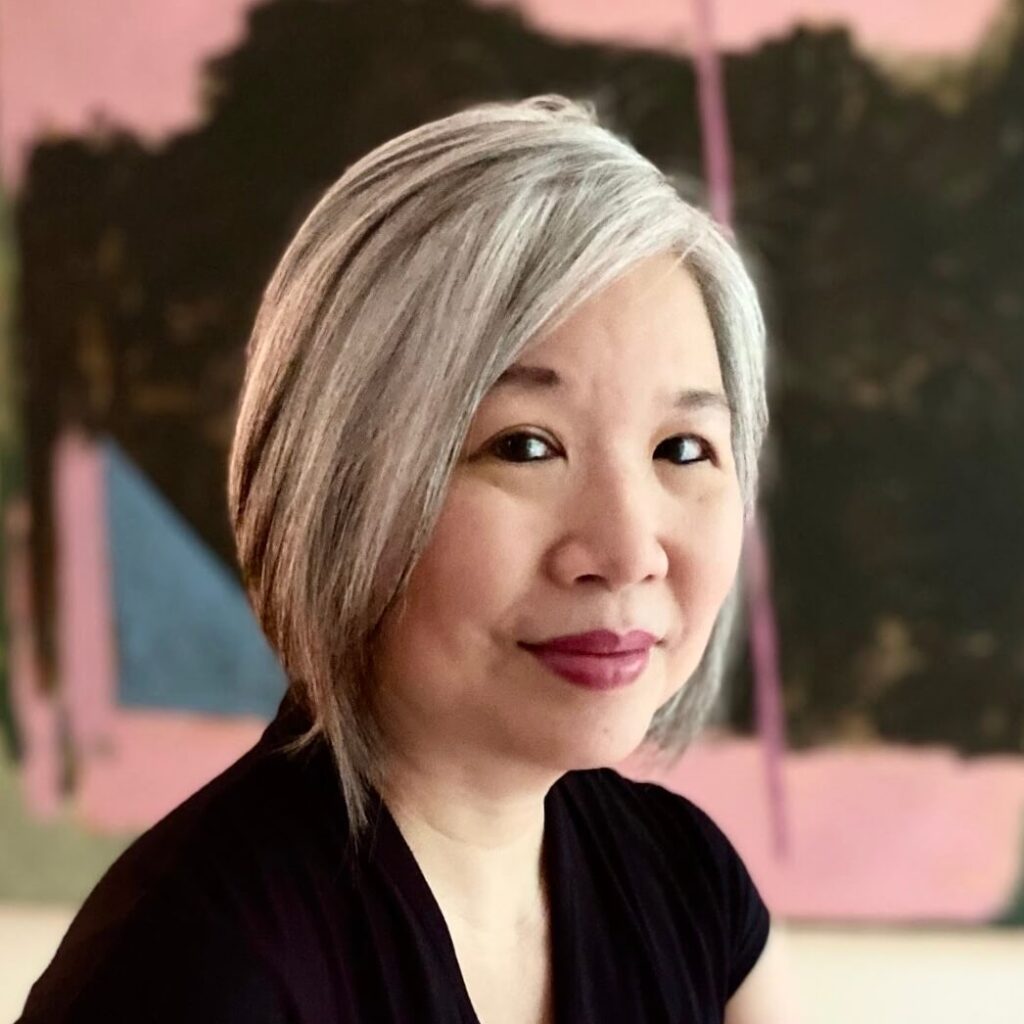
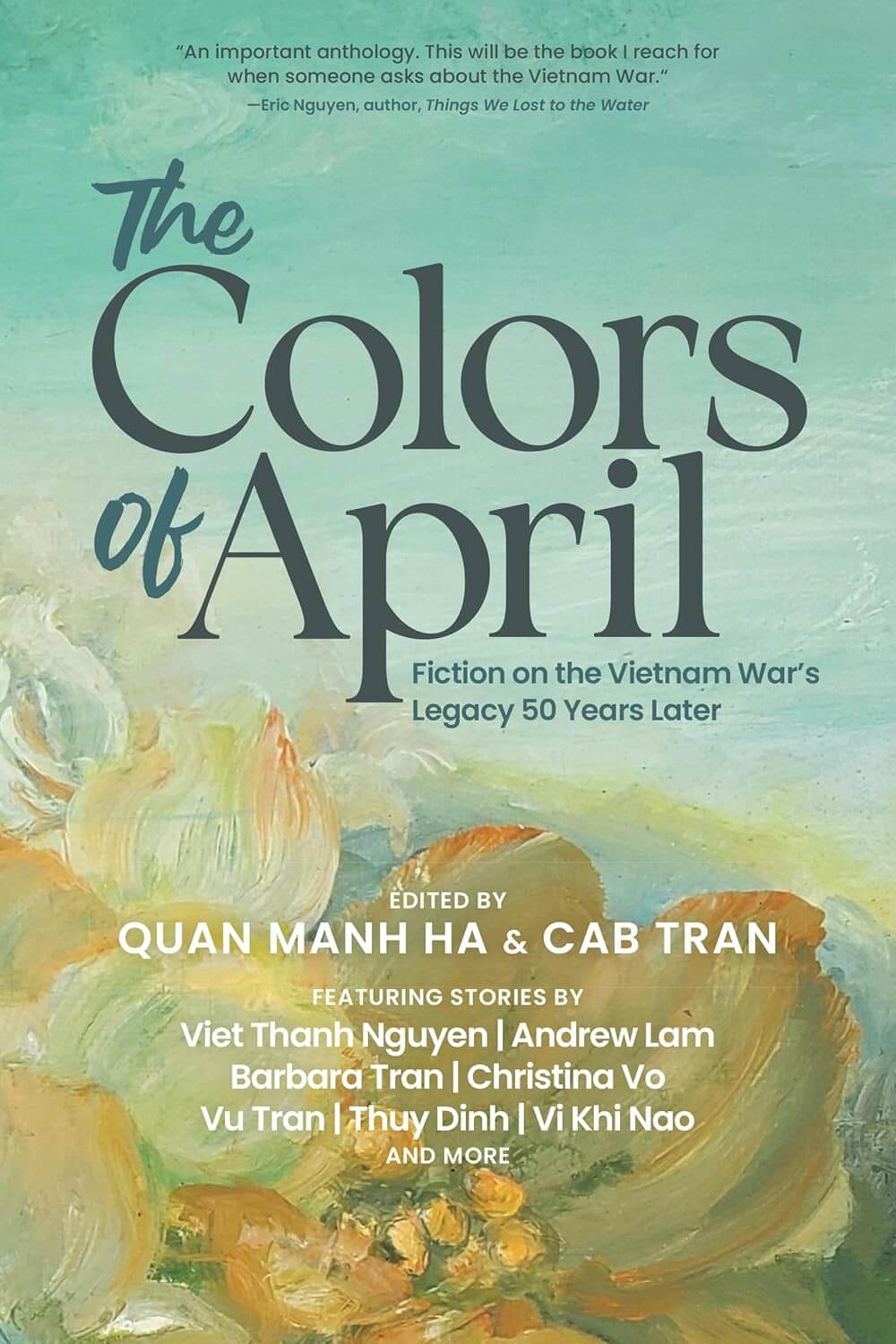
Thuy Dinh / Đinh Từ Bích Thuý is a bilingual critic, translator, coeditor of the Vietnamese webzine Da Màu, and editor-at-large at Asymptote Journal. In spring 2025, she guest-edited a Special Issue on Literature of the Vietnamese Diaspora for the magazine Words Without Borders. She is also a contributing author of The Colors of April, an anthology of fiction on the global Vietnamese experience marking the fiftieth anniversary of the end of the Vietnam War. In 2024, she served as the lead editor of Beyond Borders, an anthology of short fiction published by Da Màu.
This interview was conducted by Cathy Duong as part of the Author Spotlight series. All featured authors participated in Viet Book Fest 2026, a literary event presented by the Vietnamese American Arts and Letters Association (VAALA).
Join us on Sunday, April 12, 2026, from 10 AM to 5 PM at the Bowers Museum in Santa Ana, California for a full day honoring Vietnamese storytelling and culture in literature.
Viet Book Fest 2026 offers a full day of programming focused on Vietnamese literature, storytelling, and culture. Attendees can participate in five panel discussions, enjoy interactive activities for children, and experience youth performances that showcase Vietnamese traditions and creativity. The festival also provides a space for community collaborations, where participants can create their own art and engage in hands-on projects.