In your cookbook, you share that Mom’s Kitchen was your favorite “restaurant”, despite all that you had available growing up in Orange County’s Little Saigon. Were there any dishes that your family would prefer to eat out rather than make at home? And as the Little Saigon food scene has evolved over the years, have you and your family found any modern takes of Vietnamese cuisine to your liking, or does nothing beat the traditional family-style meal at home?
Home cooking will always hit differently—the nostalgia, the care, the love in every dish. It means quality time together bonding and cooking together. But, watching the food scene in Little Saigon grow has been meaningful in a different way. It’s been exciting to see so much representation and to witness the evolution of Vietnamese cooking.
Now that my parents are getting older, it feels especially nice to take them out—to let them relax and enjoy new experiences that remind them of home or give them experiences they’ve never had before. My mom and I are total nerds in the kitchen, so we love exploring new cooking techniques, flavors, and possibilities together. Typically, we’d prefer to try foods we haven’t tried before or foods that are time consuming.
There are so many incredible restaurants that deserve their flowers—from the longstanding institutions that helped shape Little Saigon from the very beginning to the new wave of chefs honoring Vietnamese roots through creative, innovative concepts.
To be honest, I still have so many restaurants to try. I recommend following @littlesaigonofficial and @discoverlittlesaigon to learn about old and new restaurants!
I love walking around the Asian Garden Mall to support small businesses; it makes them feel at home. A few favorite restaurants include Mama Hieus for Vietnamese Fried Chicken, Ốc & Lẩu (Vietnamese Street Food), Thiên Ân Bò 7 Món for solid its 7-course beef plates and baked catfish, Cơm Tấm Thuận Kiều co for broken rice plates, Grandpa’s Kitchen Grill & Bar for its dried egg noodle dishes, and Bánh Khọt Lady for some deep dish mini pancakes. If you love Bánh Mì , you must try the Roasted Pork Belly at Carrots & Daikon. Recently, I’ve tried Ghiền Miến Gà and it changed my mind about glass noodles as a main dish. In the 626 area, I love Summer Rolls for their Nem Nướng rolls and Bánh Bèo.
You dedicate your cookbook to your family and also to the “refugees and immigrants with similar and different stories,” as you write in your introduction. I really respect how you’ve used your social media platform to speak up against ICE and speak up for Palestine, such as the well-written and powerful letter you wrote to the Vietnamese American community and translated to help the younger generation to start a conversation with their Vietnamese speaking elders about empathizing with undocumented people. How does food assist in communicating that message of solidarity? As much as food can unite, have you seen ways in which food has distracted or divided?
I love this question. Food is such a powerful way to bring people together – it feels light, and joyful. The sense of nostalgia can be a shared interest and can foster community. But it can also become a missed opportunity if we don’t use it to discuss what’s happening around us today. Food is inherently political, and this past year has shown me how important it is to treat it not just as a distraction (which can be healthy at times), but to use it as a meaningful tool for communication—one that represents people, stories, and lived experiences. I’m still figuring out the right balance as a content creator…because people need joy, but we also can’t let that turn into blissful ignorance. The dining table, over a good meal, can be a powerful place to connect and to have meaningful conversations that raise awareness, be vulnerable, and “break bread”.
It was through food that I was finally able to have deep, difficult conversations with my parents—asking questions about their past that I had always been too afraid to raise. Writing my cookbook became more than just recipes; it became a journey to reconnect with my roots. To truly appreciate Vietnamese food, I needed to fully understand my parents’ refugee story, Vietnam’s complex history, rich culture and traditions. I wanted to understand how those narratives are woven into the dishes themselves. Ignoring that context would be a disservice to the people behind the food we love—their struggles, resilience, and the lessons embedded in each dish. You can’t claim to love our food without standing up for the people and culture behind it. And, that goes for our neighbors.
I’ve found that communicating with honesty and drawing connections between my parents’ refugee experiences and the stark similarities of today around the inhumanities around ICE, the genocide in Palestine, and the war in Iran, can open the door to meaningful dialogue. At the end of the day, I believe we want the same things— but we’re seeing and hearing different things. Conversation starts with vulnerability, empathy and a place of honesty and openness to hear each other. The term Breaking Bread couldn’t be more relevant.
Since moms don’t write down recipes, I’d love to hear how you managed to organize everything you learned from your mother’s cooking into an inviting book. Was it challenging to translate Vietnamese ingredients and names of dishes into English? Are there more recipes that you will be sharing in a future book?
I’ve always loved cooking, but it wasn’t until the past several years that I really focused on Vietnamese cuisine. I started to realize my mom was getting older, and I wanted to learn as much as I could from her while I still had the chance. Half of the recipes in the book are mine, shaped by everything she’s taught me, and the other half are hers.
For the bánh section especially, I’d come home every weekend to cook with her. I’d film the entire process, carefully measure out ingredients, and take notes as we went. Sometimes we’d collaborate on the taste or how to make the recipes more user-friendly. Afterward, I’d recreate each dish on my own to make sure the instructions were clear and my followers on social media also took part in recipe testing. It was important to us that these recipes felt accessible, not intimidating.
I always tell people to document everything. Pick up a camera, record your parents or grandparents cooking – it’s something you’ll take with you forever. Those memories are priceless and you can always reverse-engineer the recipes. It’s the time that is precious. Translating the recipes wasn’t difficult because I took the time to really understand each ingredient and technique. And once you start cooking, all those “vague” directions—like “add a little of this” or “cook until it feels right” will begin to click. That’s where the real lessons are: they’re teaching you intuition, not just following steps in a recipe.
I’m excited for people to start cooking from this book. It can feel intimidating at first, but it’s so much more approachable once you dive in. We tried to strike a balance between authenticity and practicality. I wanted to teach people the “right” way to do things and give them the grace and flexibility to adjust given their busy schedule or circumstances.
I’d love to write another cookbook someday, but only when I feel compelled to share a meaningful message. For now, I still have more living, exploring, and growing to do. Hopefully I can find a dog sitter and spend time in Vietnam, then come back inspired to tell share my story from the lens shaped by both my experiences in Vietnam and my life as a Vietnamese American.
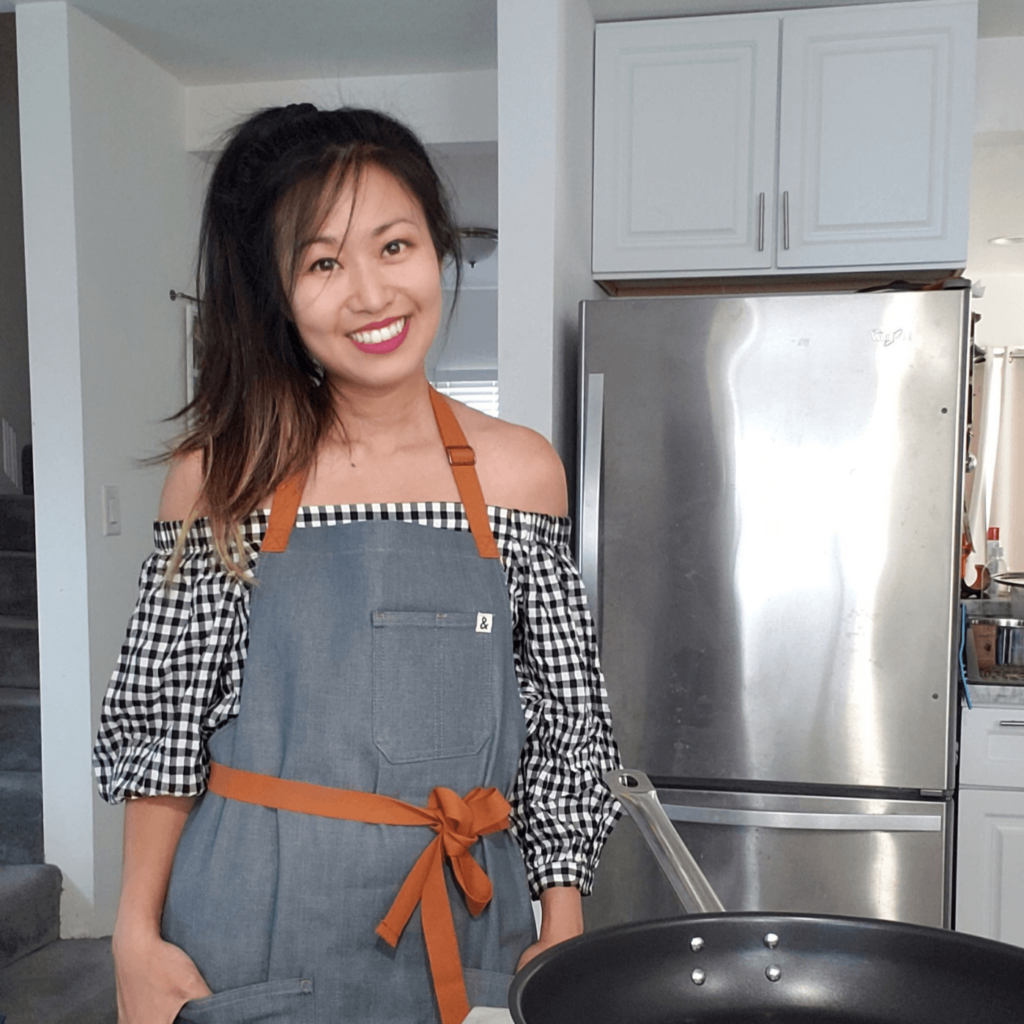
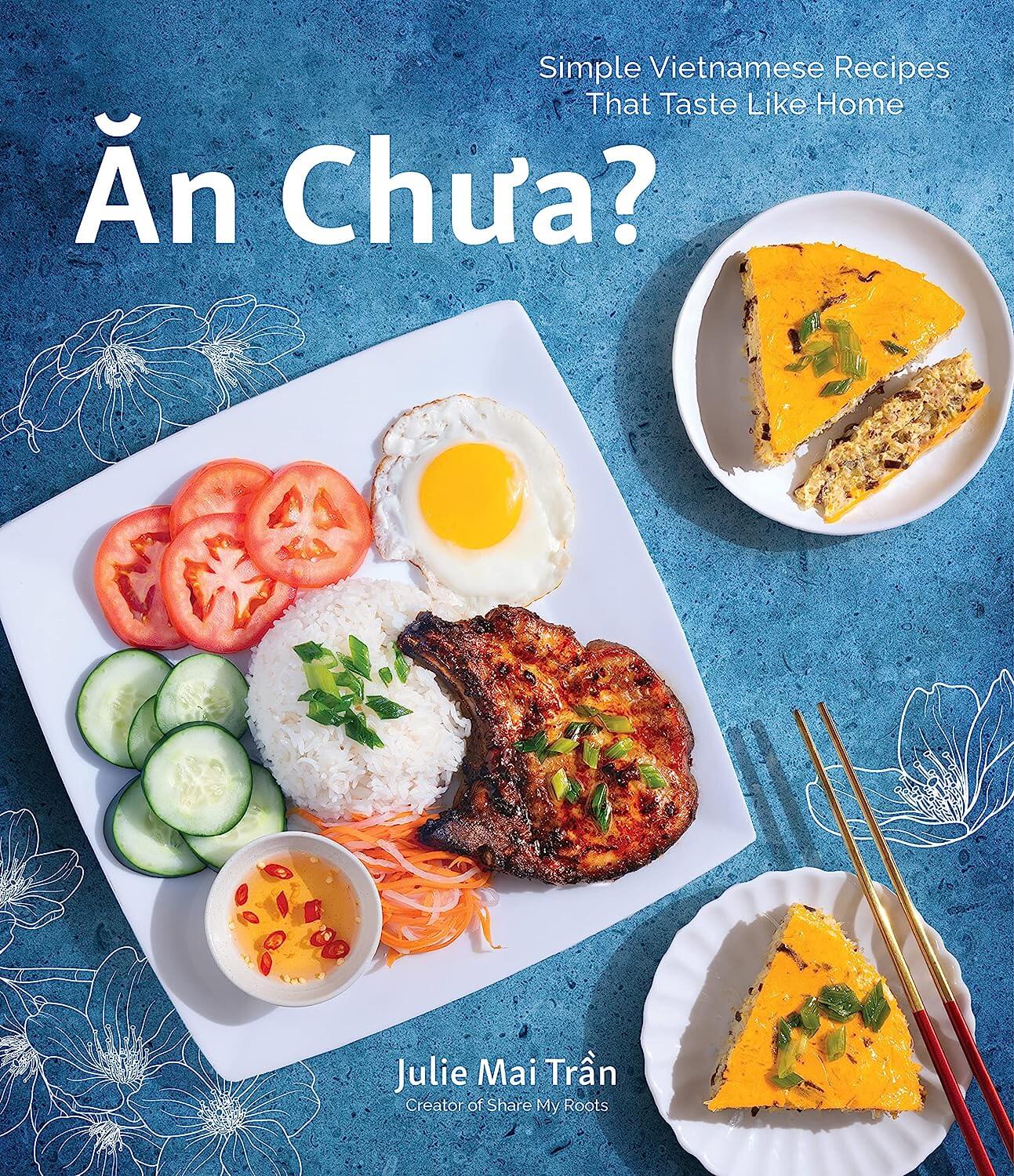
Julie Mai Trần is a first-generation Vietnamese-American who loves to eat, cook, and travel. She is the author of Ăn chưa? Simple Vietnamese Recipes That Taste Like Home, a cookbook she wrote in honor of her parents, the Vietnamese Boat People, and the people of Vietnam. In 2019, she created Share My Roots, a blog focused on authentic and modern twists on Asian recipes with a focus on Vietnamese cooking. She shares her heritage through food, preserving stories representing the refugee and immigrant experience, in honor of her parents. Her aspiration is to encourage people to cook, connect people to their roots, and shine a light on Vietnamese food, people, and culture.
This interview was conducted by Cathy Duong as part of the Author Spotlight series. All featured authors participated in Viet Book Fest 2026, a literary event presented by the Vietnamese American Arts and Letters Association (VAALA).
Join us on Sunday, April 12, 2026, from 10 AM to 5 PM at the Bowers Museum in Santa Ana, California for a full day honoring Vietnamese storytelling and culture in literature.
Viet Book Fest 2026 offers a full day of programming focused on Vietnamese literature, storytelling, and culture. Attendees can participate in five panel discussions, enjoy interactive activities for children, and experience youth performances that showcase Vietnamese traditions and creativity. The festival also provides a space for community collaborations, where participants can create their own art and engage in hands-on projects.