The naming for the Vietnamese language panel this year is “Opening the Future,” or “Mở Tương Lai” which was a nod off your short story featured on diaCritics. Your short story uses family history and personal experiences. How do your family history and personal experiences shape the way you approach writing and storytelling? When deciding which memories or experiences to include in your work, how do you determine which ones best serve the story you want to tell?
I think that combining my own life experiences with the bigger picture of history helps me make sense of things. My story “Opening the Future” or “Mở Tương Lai” – which is part of my collection called Khả Thể, or Possibility – is like a conversation between the past and all the possibilities that the future holds.
“Opening the Future” follows a narrator with “spiritual nearsightedness” who tries to use her dreams to help her friend Hương escape the country at the end of the Vietnam War.
When we look back at the great exodus of 1975 after the fall of Saigon, we’re often caught in the massive, collective narrative. It’s a story told in documentaries, textbooks, statistics, and headlines. But if you look closer, there is a whole other layer of ‘private histories’ that never made it into the public record. These are the quiet, intimate experiences of those who didn’t cross to the ‘other side.’
Take Bà Ngoại, for instance. She may die of either cancer or suicide. Her death can be read as the symbol of South Vietnam at the end of the war. Her amputated arm is a crucial mechanical device in the story.
It serves as a physical manifestation of the “collective memory” of the diaspora. Even though the arm is gone (the old country is lost), it “still clings” and causes pain. The “ghost arm” ensures that the past remains a living, aching participant in the present.
Then there is cô Hồng Trang. Her history is even more submerged because it’s defined by a choice—the cyanide vial. In our stories, that vial isn’t just a symbol of death; it’s a way to insure the future. By holding onto that ‘medication,’ the people in my family want to take back our power. They refused to let a new government or a terrifying situation decide their fate. When Hồng Trang returns to us in a dream—báo mộng—she is breaking the silence of the dead. She is reclaiming her narrative, telling us her death is not a mere disappearance, but an ultimate act of writing her own history when she chose to end her own life to protect the soul of the collective.
As both a writer and a translator, I want to give a voice to the voiceless. I find myself searching for the memories that still feel raw and emotional, even as the facts of history shift with time. Today, people can travel back and forth to Vietnam with ease, but that modern convenience doesn’t erase the past; for me, it only makes the sacrifice of these women feel more immediate.
I would like to thank the Viet Book Fest for using this story’s title as a guiding light for our mission. It beautifully suggests how we might shape the future of diasporic literature through the power of translation.
As Hồng Trang reminds us in the story: ‘The future has no right to dismiss a death from the past. All values may shift, but the cost of human life remains constant.’ This is why translation matters so deeply. Through the act of translation, our body of Vietnamese literature is transformed. It ceases to be just a legacy or a relic of the past; instead, it is given the strength to thrive, breathe, and find a new life within a new language.
As a writer and translator, how do you approach translating literature from its original language into Vietnamese while preserving the voice and cultural nuance of the text? Conversely, when translating Vietnamese literature into English, what aspects of the language or Vietnamese sensibility are the most challenging to convey?
The challenge of translating between English and Vietnamese often lies in the friction between cultural specificity—the unique social, historical, and linguistic identity of a people—and universal meaning—the core emotional or conceptual truth that transcends borders. Translating literature is like moving a piece of a culture’s heart from one place to another. You need to really understand the differences between English and Vietnamese – the places where the usual meanings of words just don’t work because of all the history and feelings behind them. My goal is to connect these two worlds without losing the shared memories and emotions that are part of the original story. For example, the phrase “vượt biên” can be translated to “crossing the border,” but for Vietnamese people, it’s so much more than that – it’s a painful reminder of the Boat People’s journey. I want to keep that feeling alive in the translation, so it still has the same power and meaning as the original.
When you’re translating something into Vietnamese, you have to be really careful about how you use words to show respect and relationships. This is because the Vietnamese language is all about how people are connected to each other and where they fit in the social hierarchy. Unlike English, where you can just use “I” and “you” for anyone, Vietnamese has lots of different words for “I” and “you” that depend on the situation and the people involved. For example, you might use “anh”, “chị”, “em”, “bác”, or “cháu” to address someone, and each of these words conveys a different level of closeness or distance. Choosing the right word is not just about following grammar rules, but about showing who you are and how you relate to others. This is something that can be hard to capture in Western languages, where the words for “I” and “you” are more general and don’t carry the same level of meaning. In Vietnamese, these small words can make a big difference in how people understand each other and themselves. So, if someone wants to translate a simple sentence like “I think you are right”, they need to know a lot about the people talking, like how old they are, if they’re a man or a woman, and what their social status is. The translator’s job is not just to translate the words, but to rebuild the whole social situation of the conversation. This can be a big challenge, because the translator needs to be able to understand the nuances of Vietnamese social relationships, and use that understanding to create a translation that sounds authentic and engaging.
What do you see for the future of Vietnamese language literature in the diaspora, especially for the future generation? Do you see translation as a bridge, a compromise, or an expansion of Vietnamese-language literature abroad?
The Vietnamese diasporic literature scene is changing in a big way, moving away from stories about survival and memories of the past, and towards a more global and multifaceted identity. For younger writers, it’s not about looking back at a lost homeland, but about exploring the complexities of who they are today. In the past, translation was seen as a way to help people in the host country understand the refugee experience. Sometimes, it was even seen as a compromise, where the unique qualities of Vietnamese culture were simplified to fit Western literary tastes. But I think translation is the key to taking Vietnamese literature to the next level. It allows new voices to reach a huge audience, not just as “ethnic” stories, but as universal literature that speaks to people all over the world. We’re seeing a new generation of writers who identify as both Vietnamese and something else, and translation is what makes this hybrid identity possible. It lets writers think in Vietnamese, but write in English, or vice versa, creating a unique space that’s just for the diaspora.
Are there particular works you hope to translate into Vietnamese in the future?
Can you share with us some projects we can expect from Da Màu Magazine in the upcoming years? Are there new genres, voices, or experimental forms Da Màu is hoping to spotlight?
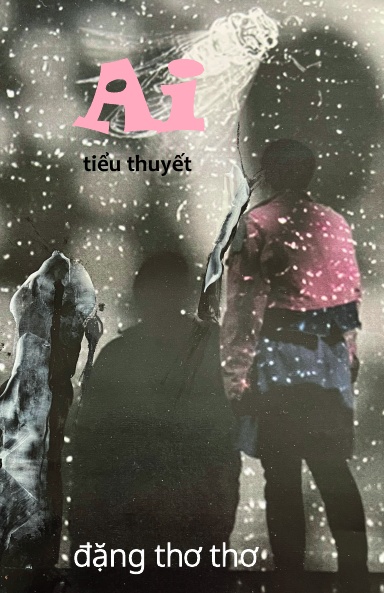
Looking ahead, the mission of Da Màu Magazine is defined by a commitment to expanding our literary borders through translation and experimental form. Our editors are currently focused on the delicate task of bringing Trần Thị NgH.’s manuscript, 10 Red Minutes (10 Phút Đỏ), to an English-speaking audience, alongside a diverse array of projects from our core contributors. We aim to showcase the experimental short stories of Professor Tri and the profound body of work by Hoàng Chính, which we believe will be a significant gift to English readers. Furthermore, I am proposing a new collection to spotlight the tireless contributions of a younger generation—writers such as Tru Sa, Nguyễn Thúy Hằng, Lê Sông Văn, and Nguyễn Thị Minh Ngọc—whose voices represent the evolving edge of our literature. On a personal level, I am deeply invested in this process of “preservation through transformation” as I look forward to Dr. Quỳnh Võ translating my debut novel, Ai, into English. Through these efforts, our poets and creative writers seek to transcend linguistic boundaries, ensuring that Vietnamese diasporic literature continues to grow into a global, multifaceted conversation.

Đặng Thơ Thơ is a novelist, short-story writer, essayist, and author of Ai, her first novel (Da Mau Press, 2024) and two collections of short stories The Winter Exhibition (Phòng Triển Lãm Mùa Đông) (Văn Mới, CA, 2002) and Possibilities (Khả Thể) (Người Việt, CA, 2014).
She is co-founder and editor-in-chief of the Vietnamese literary e-zine damau.org and President of Da Màu Foundation, a registered non-profit organization (501(c)3). From 2002-2004, she served on the Board of Directors as Literature Chairperson for The Vietnamese American Arts and Letters Association (VAALA). From 2003-2005 she was on Hợp Lưu Magazine editorial staff.
This interview was conducted by Alan Trinh, Viet Book Fest’s Program Manager, as part of the Author Spotlight series. All featured authors participated in Viet Book Fest 2026, a literary event presented by the Vietnamese American Arts and Letters Association (VAALA).
Join us on Sunday, April 12, 2026, from 10 AM to 5 PM at the Bowers Museum in Santa Ana, California for a full day honoring Vietnamese storytelling and culture in literature.
Viet Book Fest 2026 offers a full day of programming focused on Vietnamese literature, storytelling, and culture. Attendees can participate in five panel discussions, enjoy interactive activities for children, and experience youth performances that showcase Vietnamese traditions and creativity. The festival also provides a space for community collaborations, where participants can create their own art and engage in hands-on projects.