Trong Vườn Mắt Em (2022) is unique because you translate directly from Spanish to Vietnamese, and bring short stories across various genres from 21 Spanish-speaking countries to the Vietnamese literary world. Your next book, Màu Nước Trời Hè (2026), also includes some short stories translated from Spanish. I’d love to hear about your personal relationship with Spanish. Did living alongside large Spanish-speaking communities in Los Angeles and Orange County play a role in your dedication to studying Spanish? Do you recall the first Spanish literary work that you wanted to translate to Vietnamese? Are there Vietnamese stories you’d like to translate and share with a Spanish audience?
I began teaching myself Spanish while I was still in Vietnam. At the time, Spanish was rare in the country and offered only at a few universities. As a result, I bought a used copy of L’Espagnol sans peine (“Spanish without Toil”), a textbook written in French, along with the cassette tape that accompanied it. With those materials, I began my journey of learning Spanish.
When I arrived in the U.S., my self-taught Spanish allowed me to skip the first semester of Elementary Spanish in college and enroll directly in Spanish 102. I later chose Spanish Linguistics as my undergraduate major, both because of my passion for the language and because Spanish is spoken by large Latino communities in Southern California.
My first translation from Spanish into Vietnamese was a chapter from La Historia de mis dientes (The Story of My Teeth, 2013) by the Mexican writer Valería Luiselli. The translation was first published in the e-magazine Da Màu in 2018 and is also included in my collection Trong Vườn Mắt Em.
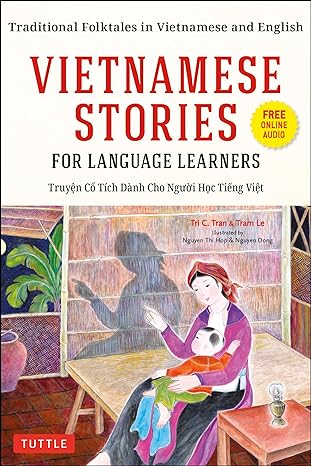
I am currently working on a bilingual Vietnamese–English book project with Tuttle Publishing titled Vietnamese Folktales for Language Learners. I think Hispanic readers would love these folktales, so a version in Spanish would be a great idea as well. However, the publisher that commissioned the project produces books only in English paired with an Asian language, rather than with languages such as Spanish.
Back in 2012, you participated in the Vietnamese American Oral History Project at UC Irvine. In the interviews, you expressed how important it is for future generations of Vietnamese Americans to maintain the Vietnamese language, and one of the goals of the Association of the Vietnamese Language and Culture Schools in Southern California is to encourage kids to speak Vietnamese with each other, not just with their grandparents. You observed that even fluent kids seem psychologically reluctant to speak Vietnamese with their peers and that it isn’t a linguistic problem. Are there ways that you have tried to engage or encourage second-generation Vietnamese American audiences, outside of being a Vietnamese language instructor? Is this younger generation in mind as an audience in your literary projects?
While many Vietnamese American children and teenagers today can speak, read and write Vietnamese to some extent, it is also true that they often use the language primarily to communicate with their parents and grandparents. Their linguistic abilities typically do not extend much beyond basic communication. They can speak Vietnamese well enough to be understood, but not necessarily to discuss complex ideas; they can write correctly, though not in an academic or creative manner; and they can read for basic comprehension, but not for pleasure or deeper learning.
For this reason, a group of elementary and middle school teachers and I recently founded a nonprofit publisher of trilingual children’s books (Vietnamese, English and Spanish) called uSAViet (pronounced “You Save Viet”). Our mission is to inspire young readers to develop a love of reading in Vietnamese for both enjoyment and learning. We hope that children who grow up loving books will carry that passion throughout their lives and benefit from it in many ways. I firmly believe that a person’s linguistic abilities cannot reach their full potential without the capacity to appreciate literary, academic or scientific works in their mother tongue (or in their heritage language).
How did you come to find your community of people who love languages, literary translation, and Vietnamese literature? Did your passions and connections with like-minded people withstand the Vietnam War and migrations? Did it ever feel like a lonely path, or were you always surrounded by supportive people? Do you continue to venture in new languages and world literatures?
My first connection with the community of volunteers dedicated to preserving Vietnamese language and culture (and later with those involved in Vietnamese literature and literary translation) came through the Association of Vietnamese Language and Culture Schools in Southern California, now known as the Union of Overseas Vietnamese Language Schools.
Together with, to use your term, like-minded people, I have found my passions and commitments strongly reinforced and warmly supported. Being part of this community, united by shared interests and missions, brings me joy, excitement and inspiration.
While I do not plan to learn any entirely new languages, I continue to make time to deepen my knowledge of languages I have studied but do not know as thoroughly as English, French and Spanish, such as Italian, Portuguese and Romanian. These languages are important to my teaching and research.
As for world literatures, I will continue exploring new stories and plays in English, French and Spanish to translate into Vietnamese. Literary translation is one of my passions, alongside linguistics and Vietnamese literary writing.
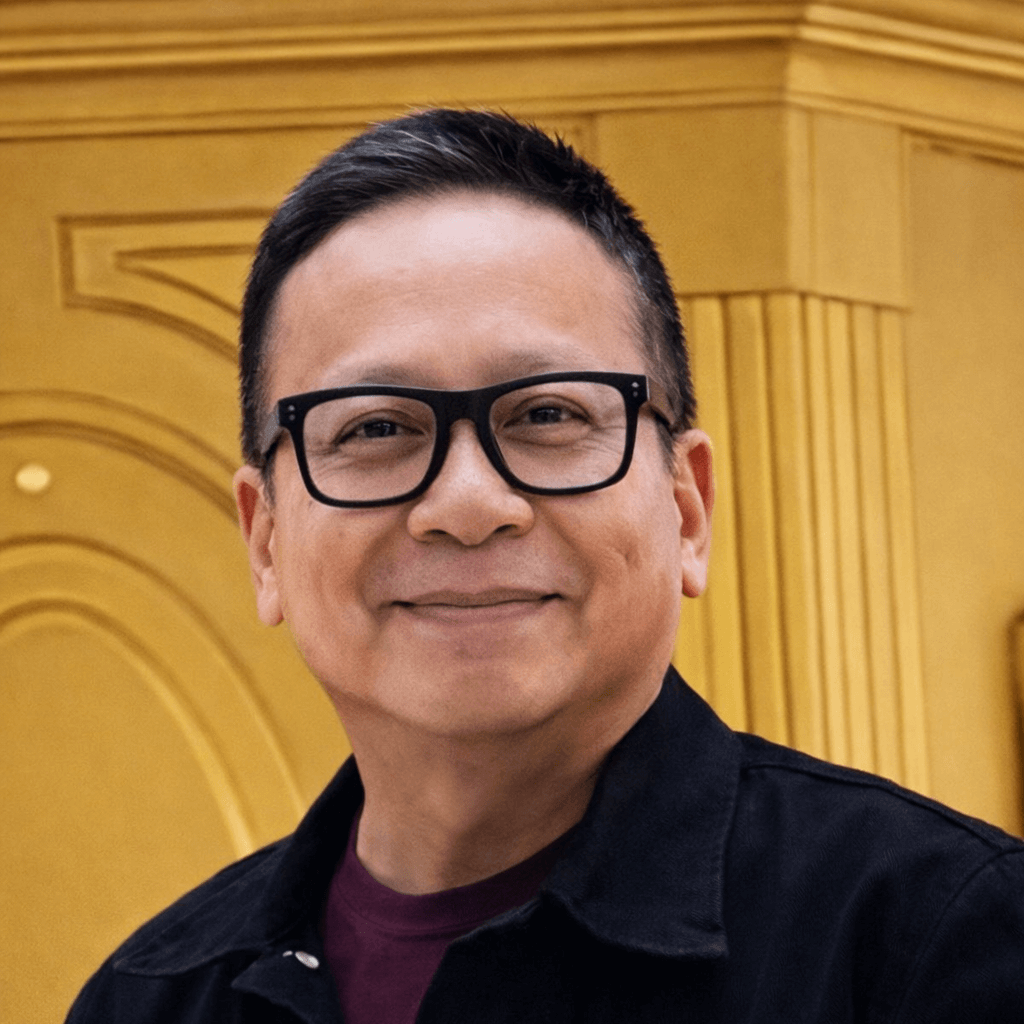
Tri C. Tran, PhD, teaches Linguistics and Vietnamese at the University of California, Irvine and Spanish at Fullerton College. He obtained his PhD and MA in Romance Linguistics and Literatures from the University of California, Los Angeles, and his BA in Spanish Linguistics from the University of California, Irvine. Tran is actively involved in community activities related to teaching, publishing and preserving Vietnamese language and culture. He also regularly contributes to several Vietnamese language newspapers as well as print- and e-magazines in the US.
This interview was conducted by Cathy Duong as part of the Author Spotlight series. All featured authors participated in Viet Book Fest 2026, a literary event presented by the Vietnamese American Arts and Letters Association (VAALA).
Join us on Sunday, April 12, 2026, from 10 AM to 5 PM at the Bowers Museum in Santa Ana, California for a full day honoring Vietnamese storytelling and culture in literature.
Viet Book Fest 2026 offers a full day of programming focused on Vietnamese literature, storytelling, and culture. Attendees can participate in five panel discussions, enjoy interactive activities for children, and experience youth performances that showcase Vietnamese traditions and creativity. The festival also provides a space for community collaborations, where participants can create their own art and engage in hands-on projects.